



Unmet Need
- Anti-VEGF therapies (e.g., ranibizumab, aflibercept) are the gold-standard and dominate the multibillion dollars markets for retinal conditions such as wet age-related macular degeneration (AMD), diabetic macular edema (DME), and retinal vein occlusion. These therapies require repeated intravitreal injections over months to years to prevent vision loss and to maintain efficacy because the effects are reversible and drug levels decline rapidly.
- Frequent injections impose a substantial clinical burden, including numerous clinic visits, procedure risks (e.g., infection, inflammation), patient discomfort, and resource utilization in ophthalmology practices. In the real world, these logistical hurdles lead to under-dosing and suboptimal visual outcomes compared to clinical trial benchmarks.
- Despite the effectiveness of existing therapies, there remains a clear need for dose-controlled, sustained, and repeatable drug delivery modalities that can minimize injection cycle, reduce cumulative treatment risks, and improve patient compliance and outcomes.
Our Innovation
A new class of dissipative hydrogel microcapsules/microgels tailored for transient and dose-controlled release of therapeutic biologics for ocular use:
- Structure & composition:
Hydrogel microcapsules (3–6 µm) and microgels (2–4 µm) suspended in aqueous buffer solutions; biocompatible carriers engineered for controlled loading and release of molecules with varied molecular weights. - Payload versatility:
Capable of loading antibodies (e.g., Aflibercept, ranibizumab) and aptamers (e.g., anti-VEGF) targeted to key retinal disease pathways. - Stimulus-responsive activation:
Redox-activated and photo-responsive carriers incorporate biocompatible photosensitizers responsive to visible or near-IR light. - Dose-controlled transient release:
Carriers can be unlocked via a biocompatible chemical agent or light, triggering a transient payload release (4–15 min activation; 6–8 h release closure) followed by autonomous re-closure. - Multiple release cycles:
Support single injection implantation with multiple, externally activated release events, enabling topical or light-induced dosing without repeated injections. - Preliminary in-vivo proof-of-concept:
Initial animal experiments show that the amount of antibody released per cycle is comparable to standard clinical dosing, with the added benefit of controlled modulation and potential reduction in injection frequency.
Advantages
- Controlled, on-demand dosing: Enables precise temporal control of therapeutic release, unlike passive sustained-release systems.
- Reduced clinical burden: Potential to decrease injection frequency and clinic visits, addressing a major unmet need in current ocular treatment paradigms.
- Multiple cycles from a single implant: Photo or chemical triggers allow sequential release events over time from one implant, reducing procedural risk and patient discomfort.
- Biocompatibility: Both the carrier matrix and activation stimuli are designed for ocular safety.
- Broad payload compatibility: Suitable for a range of therapeutic molecules including antibodies, aptamers, and oligonucleotides.
- Intellectual property: Patent-protected technology, ripe for clinical translation and commercial development.
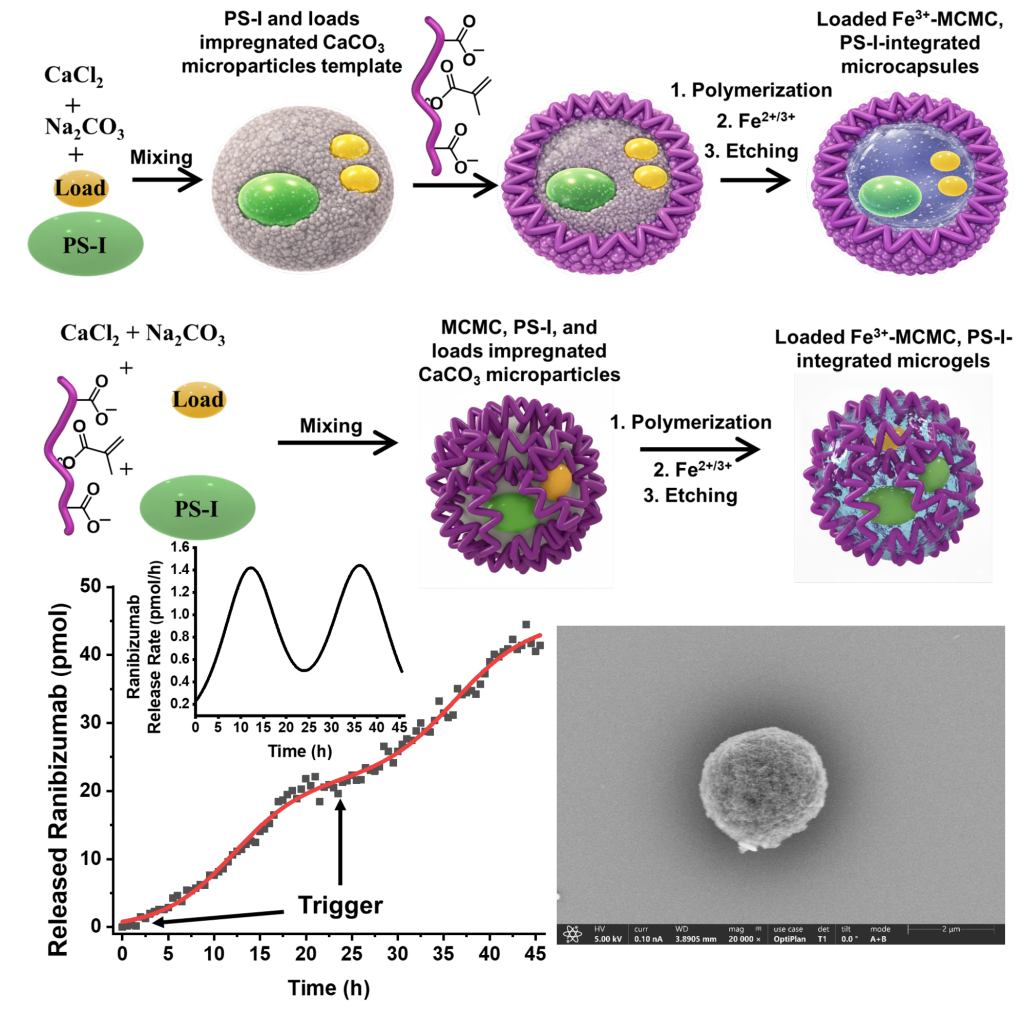
Figure 1. Cyclic dissipative release of Ranibizumab antibody, with the transient release rate
Commercial Opportunity
We are seeking collaboration with pharmaceutical companies, biotech investors, and ocular drug delivery partners to advance this platform toward clinical development and commercialization.
Contact in Yissum: Ariela Markel