



Abstract
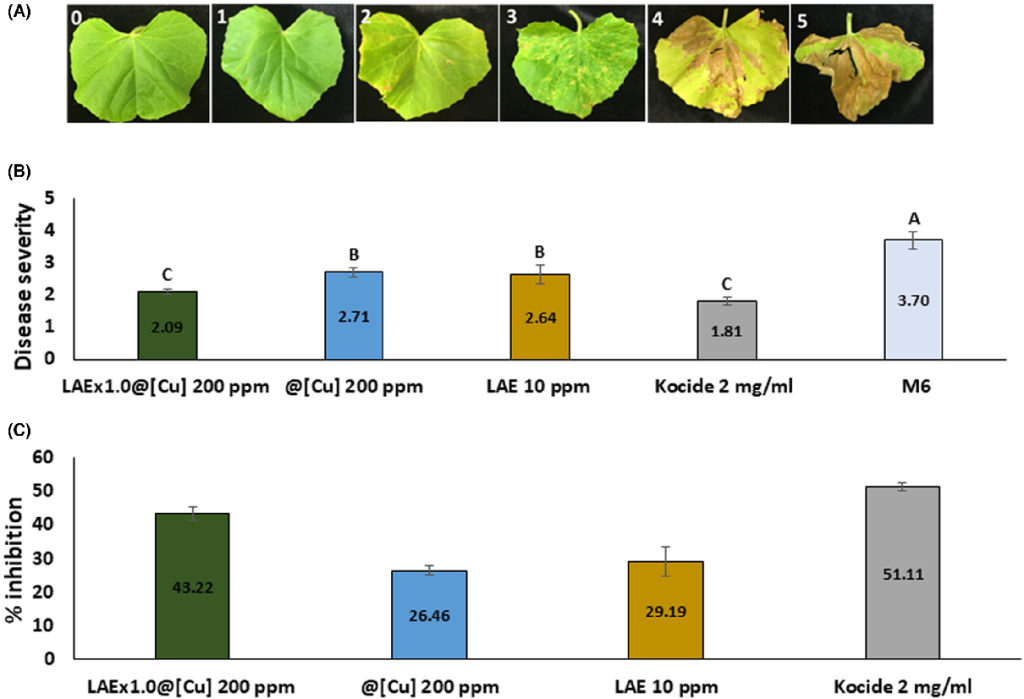
Revolutionary metal-organic composite technology achieving 7-log bacterial reduction with 43% disease control efficacy, offering superior performance to conventional copper-based bactericides while addressing copper resistance challenges.
Background & Unmet Need
Plant pathogenic bacteria cause devastating crop losses globally, with bacterial diseases affecting virtually all major crops. The global crop protection chemicals market faces critical challenges as current bacterial disease management relies heavily on copper-based bactericides that suffer from:
- Limited efficacy and easy wash-off during irrigation/rain
- Development of copper-resistant bacterial strains affecting 60-80% of treated fields³
- Phytotoxicity requiring frequent high-concentration applications
- Environmental contamination concerns driving regulatory restrictions
Key Competitors:
- Kocide® 2000 (DuPont) – copper hydroxide bactericide, market leader but faces resistance issues
- Champion® (Nufarm) – copper hydroxide with spreader-sticker
- Badge® (Syngenta) – copper oxychloride formulation
- Cueva® (Certis) – OMRI-listed copper octanoate for organic farming
The bacterial plant disease control market segment represents approximately $2.8 billion annually, with urgent need for innovative solutions as copper resistance spreads globally.
Our Innovation
Novel metal-organic composites created by entrapping lauroyl arginate ethyl ester (LAE) antimicrobial molecules within a copper matrix, delivering unprecedented synergistic bactericidal activity exceeding individual component performance.
Major Technological Advantages:
- Superior Efficacy: 7-log bacterial reduction (99.99999% kill rate) vs 4-log reduction for conventional copper bactericides – representing 1,000x higher potency
- Resistance-Breaking Technology: Synergistic dual-mode action overcomes existing copper resistance mechanisms through membrane disruption + metal toxicity
- Reduced Application Rates: Effective at 25 ppm vs 200-400 ppm for conventional copper products – 87% reduction in active ingredient usage
- Enhanced Persistence: Composite structure provides controlled release, reducing wash-off losses and extending protection periods
- Environmental Safety: GRAS-status LAE component (FDA food additive E-243) combined with reduced copper load addresses regulatory concerns
Technology
The proprietary entrapment process dissolves LAE in a copper sulfate solution with zinc reducing agent, creating stable metal-organic composites through controlled precipitation. The resulting microscopic particles contain 1-5% LAE by weight entrapped within a copper-cuprite matrix. Unlike simple mixtures, the composite structure enables:
- Contact-mediated bacterial killing without significant ion release (0.6% copper, 10% LAE release over 24h)
- Dual-mechanism action: LAE disrupts bacterial membranes while copper provides secondary antimicrobial activity
- Proven in-planta efficacy against Acidovorax citrulli (bacterial fruit blotch) matching commercial Kocide® performance
Commercial Opportunity
The researchers are seeking an industry partner to collaborate and sponsor additional research toward field trials and commercial development. The partner will receive an option to license the intellectual property at the completion of R&D, including:
- Exclusive licensing rights for specific crop/geographic markets
- Access to expanded pathogen spectrum testing data
Patents & Publications
Published: https://pubmed.ncbi.nlm.nih.gov/39268832/
Patented: PCT/IL2020/050681 National Phase in USA and EU (Yissum # 6589)
Contact in Yissum
Ilya Pittel, Ph.D. | VP of Business Development
AgTech, FoodTech, Veterinary & Environmental Sciences
Yissum, The Technology Transfer Company of
The Hebrew University of Jerusalem
T + 972.2.658.6693 | M +972.54.782.2354
Hi-Tech Park, Edmond J. Safra Campus, Givat Ram