


Unmet Need
- 3D printing is increasingly used in medical devices and biomedical research, but most printed objects remain passive and lack built-in therapeutic functionality.
- Current 3D-printed medical products rarely enable controlled drug release or external activation such as heat.
- Existing solutions often rely on post-printing drug loading, coatings, or additional components, increasing complexity and limiting design flexibility.
- There is a strong unmet need for customizable medical objects that combine structure, mechanical control, and active therapeutic functions in a single manufacturing step.
Our Innovation
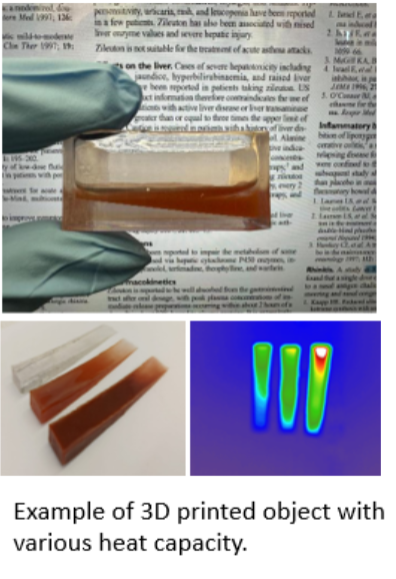
- We developed a functional ink platform for DLP 3D printing that enables fabrication of active medical devices, such as drug-eluting implants and research platforms, rather than passive structures
- The ink allows direct incorporation of drugs and polymeric carriers, enabling controlled and sustained drug release from solid 3D-printed devices.
- This enables the creation of localized drug-delivery devices, with potential use in implantable or site-specific therapeutic applications.
Advantages
- Enables 3D-printed medical objects with built-in therapeutic functionality.
- Combines structural design, mechanical tuning, and drug release in a single printing process.
- Allows remote, non-invasive activation using suitable tissue penetrating signals.
- Eliminates the need for secondary drug-loading or coating steps.
- Compatible with biocompatible materials and suitable for further development toward in-vivo applications.
- Highly versatile platform adaptable to multiple medical and research uses.
Commercial Opportunity
We are seeking collaboration with medical device companies and pharmaceutical companies, interested in the development of drug-eluting medical devices and functional therapeutic platforms based on this printing technology.
Contact in Yissum: Ariela Markel