



Application:
- Metabolic dysfunction-associated steatohepatitis (MASH), formerly known as NASH, is a rapidly growing chronic liver disease affecting 20–37% of adults worldwide.
- Prevalence is particularly high in type 2 diabetes (57–64%) and obesity (14–47%).
- Characterized by fat accumulation, inflammation, and fibrosis, leading to cirrhosis and hepatocellular carcinoma.
- No approved drugs currently exist to reverse or prevent liver fibrosis.
- The MASH market is projected to exceed $24 billion by 2028, representing a major unmet medical need and commercial opportunity.
Our innovation:
- Development of a new class of indoline derivatives (lead compound AN1284 / SPE200) targeting the underlying mechanisms driving MASH progression.
- Potent antioxidant and anti-inflammatory properties with selective liver uptake after oral administration.
- In vivo efficacy demonstrated in several models:
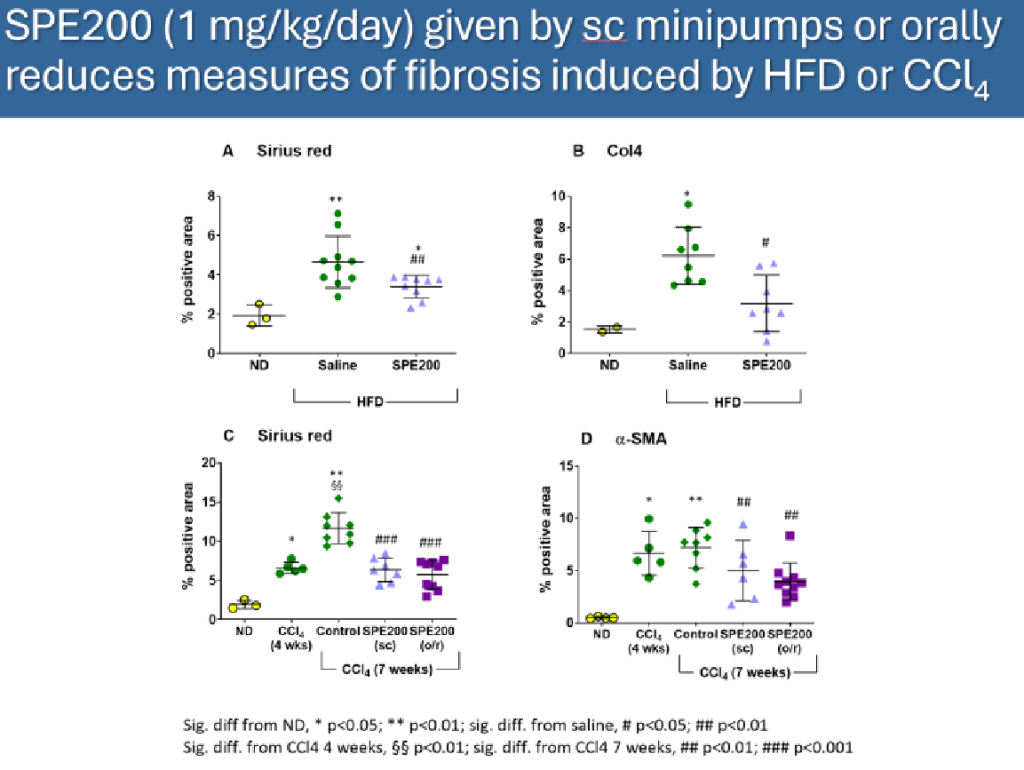
- MASH (high-fat diet, 4 months): Oral AN1284 (1 mg/kg/day) reduced liver weight, triglycerides, ALT, and fibrosis markers, even when treatment began after disease onset.
- Acute liver injury (galactosamine/LPS): Reduced lethality from 90% → 20%, and abolished elevation in ALT, TNFα, and IL-6.
- Type 2 diabetes (db/db mice): Prevented kidney damage, reduced TNFα, IL-18, TGFβ, and preserved β-cell mass and insulin sensitivity.
- Mechanism of action:
- Decreases FAS and SREBP-1c; increases ACOX-1 and CYP1a1 via AhR activation.
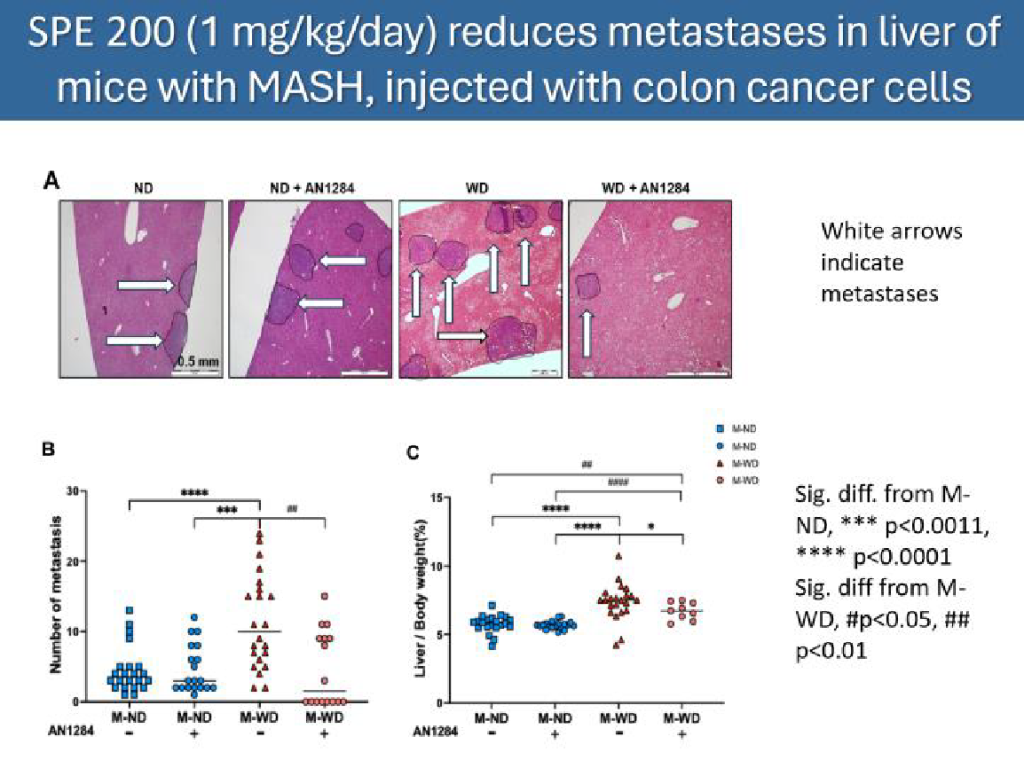
- Restores immune surveillance by lowering PD1, PDL1, and FOXP3, and increasing CD8⁺ T-cell and NK-cell activity.
Advantages:
- Novel, orally active therapeutic class targeting both metabolic and immune pathways.
- Effective in reversing fibrosis and inflammation, even post-disease onset.
- Multi-organ benefits: liver, kidney, and pancreatic protection.
- Low toxicity: negative Ames and micronucleus assays; 99.7% pure GLP-grade material.
- Mechanism and efficacy validated by peer-reviewed publications.
- Preclinical data package ready to support Phase I initiation following GLP tox.
Commercial Opportunity:
- We are seeking collaboration with pharmaceutical and biotechnology companies, as well as investors, to advance SPE200 (AN1284) toward Phase 1 clinical trials.
- This program offers a low risk of toxicity, strong preclinical validation, and a clear translational path to clinical development.
- It addresses a large unmet medical need in a multi-billion-dollar market with no approved therapies for MASH/NASH.
Contact in Yissum: Ariela Markel